

Toys and games have broad appeal this holiday season: Numerator research finds four in five toy-purchasing households plan to buy more for the holidays, including nearly every Millennial household. But toy shopping looks different across generations, as life stage influences who consumers buy for, what drives their decisions, and when they shop. With holiday shopping already underway, understanding these generational differences can help brands and retailers tailor their messaging to shoppers still making their holiday purchases.
To explore these trends, Numerator analyzed 2025 holiday toy purchases to identify historical shopping behaviors and preferences and surveyed more than 1,000 shoppers who purchased a toy at least twice between June 22 and September 22, 2026, about their intentions for the 2026 holiday season.
Who are consumers buying toys and games for this holiday season?
Children remain the most common gift recipients, particularly those ages 1–6 and 7–12, whether they live in the shopper’s household or elsewhere.
But holiday toy shopping extends beyond parents and relatives buying for children. During the 2025 holiday season, defined as October 1 through December 25, 70% of toy and game shoppers had no children in their household. This year, nearly one-third of planned buyers intend to purchase toys or games for themselves, while almost half plan to buy for another adult.
Intended recipients vary by generation. Millennials are especially likely to buy for children in their household, while Gen Z shoppers are just as likely to purchase for themselves as for a child at home. Boomers, meanwhile, are more likely to shop for children outside their household.
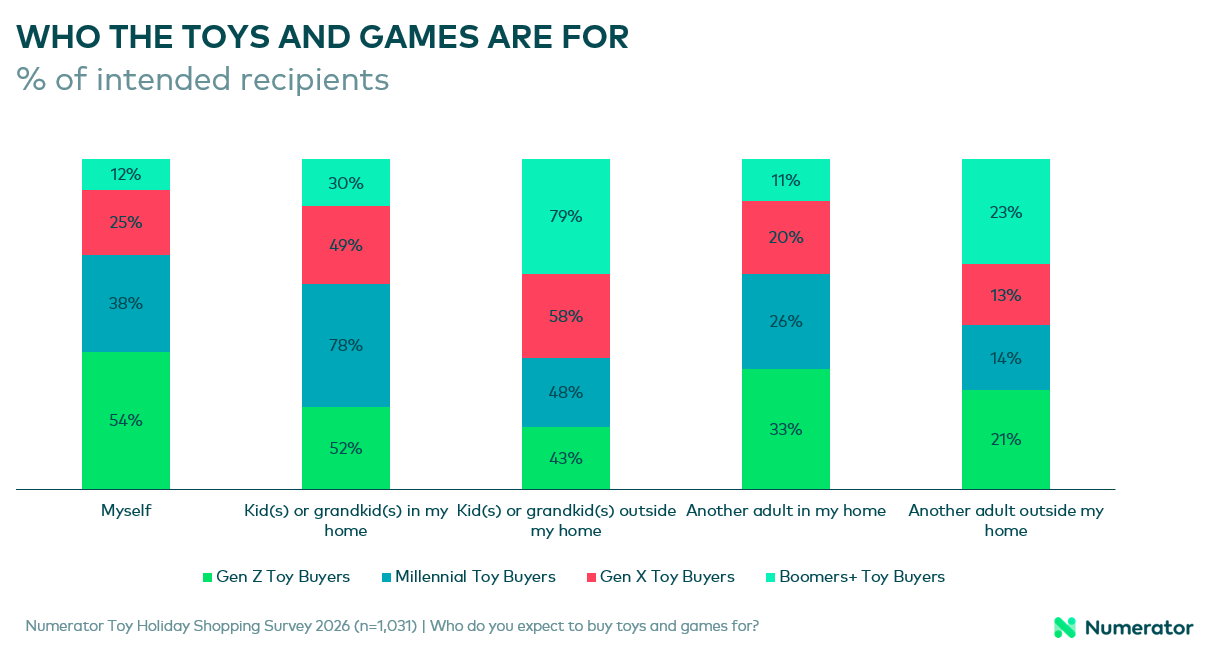
These differences highlight an opportunity for brands and retailers to reach a broader audience beyond parents, including grandparents, other relatives, and adults shopping for themselves or other adults. Gift guides tailored to specific ages, interests, or recipients can help brands better align with shoppers’ needs and help them find relevant products.
When do consumers start their holiday toy shopping, and where do they shop?
While Black Friday remains a critical holiday shopping event, many consumers are starting early. About 40% of planned toy buyers had already started shopping by early October, and most of those who haven’t started expect to begin by early November. Boomers+ are among the earliest shoppers, with nearly half already making purchases.
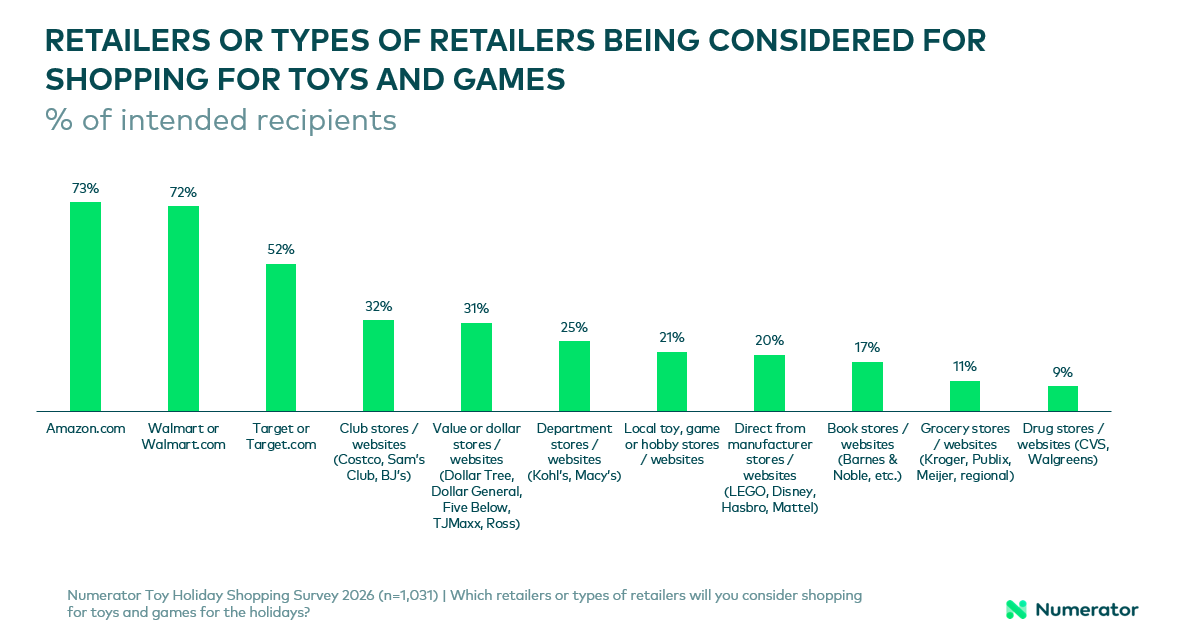
Historical purchase data shows that holiday toy shoppers visit multiple retailers and channels, both online and in-store. Nearly half of households (46%) bought toys from three or more retailers during the 2025 holiday season, in line with 2024. Generationally, Boomers+ and Gen X direct a greater share of toy spending to Amazon, while Millennials and Gen Z favor Target. All generations show healthy engagement at Walmart.
Looking ahead to the 2026 holiday season, nearly three-quarters of planned toy buyers expect to buy toys and games online, while nearly three in five plan to shop in stores. Amazon and Walmart lead in terms of intent to shop, followed by Target, club stores, and value and dollar stores.
For brands and retailers, these behaviors reinforce the importance of engaging shoppers early and maintaining visibility across channels. Consistent product information, compelling promotions, and gift inspiration can help shoppers discover and compare options, while reliable product availability can help turn purchase intent into sales.
What are the top considerations when buying holiday toys and games?
Amid tightening economic conditions, spending plans are mixed. About two in five shoppers expect to spend the same as last year, while one third expect to spend more and roughly one quarter expect to spend less. Gen Z and Millennials are more likely to anticipate increasing their spending compared to last year, while Gen X and Boomers are more likely to cut back.
Price and discounts are the leading considerations when shopping for both children and adults, but other priorities depend on the intended recipient. When buying for children, shoppers are more likely to prioritize age appropriateness and wish lists, followed by creativity, quality and durability, and educational value.
For adult recipients, hobbies and personal interests matter more. Gen Z consumers are drawn to display or decorative items, while Millennial consumers are most likely to shop for products that evoke childhood nostalgia. Gen X consumers place greater emphasis on brands and characters, and nearly half of Boomers value toys and games that promote relaxation or stress relief.
Brands and retailers can appeal to these different motivations by tailoring messaging. Clear age recommendations, wish list favorites, and educational benefits can guide purchases for children, while gift suggestions centered on hobbies, nostalgia, and personal interests can resonate with adults.
Which toy and game categories and brands appeal to each generation?
Arts and crafts lead planned toy and game purchases across generations (49%), followed by board games, building sets, puzzles and brainteasers, and dolls and accessories. These categories have broad appeal, while interest in other categories varies by age group.
Gen Z shoppers show stronger interest in plush toys and action figures, while Millennials gravitate toward surprise toys and brands such as Crayola and Play-Doh. Outdoor and active play are among Gen X’s leading interests, while Boomers are drawn to arts and crafts, preschool toys, and building sets.
Licensed properties also influence purchase considerations, with video games, movies and TV shows, and books or comics leading the list. Gen Z and Millennials show greater interest in licensed toys, particularly those tied to anime and video games, while Gen X and Boomers are more likely to say they do not consider any licensed properties.
LEGO (48%) and Disney (44%) lead in brand consideration across shopper groups. Funko Pop!, Pokémon, Marvel, Hello Kitty, and Uno skew toward younger shoppers. As brands and retailers consider assortment, the data points to a mix: keep broadly appealing categories visible, then use generational differences to guide which products and properties get additional attention.
Where do holiday shoppers discover toy and game gift ideas?
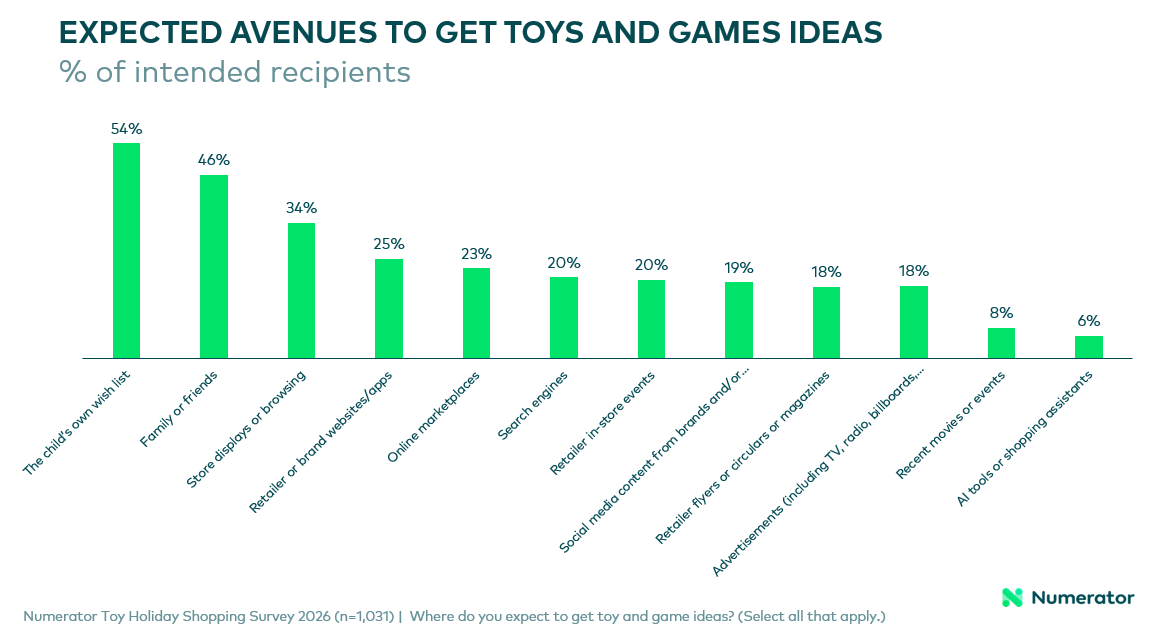
Holiday shoppers draw inspiration from a combination of personal recommendations, digital resources, and in-store experiences.
Children are the leading source of gift ideas (54%), followed by friends and family (46%). Online resources, including search engines, retailer and brand websites or apps, and marketplaces, influence more than half of shoppers, while in-store displays, browsing, and events also inspire over half.
AI shopping tools currently account for a smaller share of gift inspiration (6%), but are nonetheless worth monitoring. As of July 2026, nearly 1 in 3 households were using AI platforms, suggesting opportunities for AI-assisted product discovery as adoption expands.
Beyond inspiration, shoppers want a more convenient purchasing experience. Top requests include better prices and promotions, reliable product availability, broader selection, and less stressful store visits. Consumers also express frustration with sold-out products, crowded stores, long checkout lines, viral product hype, and resellers purchasing limited inventory.
Brands and retailers can address these challenges by connecting product discovery with a seamless path to purchase. Clear product information, organized displays, reliable inventory, and alternative recommendations when popular items sell out can help shoppers find the right gifts with less friction.
How can brands and retailers win with holiday toy shoppers in 2026?
Numerator’s findings highlight four priorities for brands and retailers looking to reach holiday toy shoppers:
- Plan for a wider range of gift buyers. Expand messaging beyond parents to reach grandparents, extended family members, and adults purchasing toys and games for themselves or other adults.
- Reach shoppers before peak retail events. With about 40% of planned buyers already shopping by early October, early engagement and sustained visibility can help brands capture demand throughout the season.
- Pair value with recipient-specific messaging. Competitive pricing matters, but age appropriateness, wish lists, hobbies, and personal interests can help differentiate products and guide gift decisions.
- Connect discovery to product availability. Accurate product information, dependable inventory, and relevant alternatives displayed across all channels can help turn inspiration into purchases.
The strongest holiday toy strategies will balance the preferences generations share with the differences that shape their shopping behavior. Categories with broad appeal can anchor the assortment, and targeted gift recommendations, timely promotions, and dependable availability can help shoppers find the right product.
Numerator helps brands and retailers develop winning strategies through consumer purchase data and verified buyer survey feedback that connect what consumers say with what they actually buy. Reach out to your Numerator representative or hello@numerator.com for comprehensive insight into your verified brand buyers this holiday season.
